
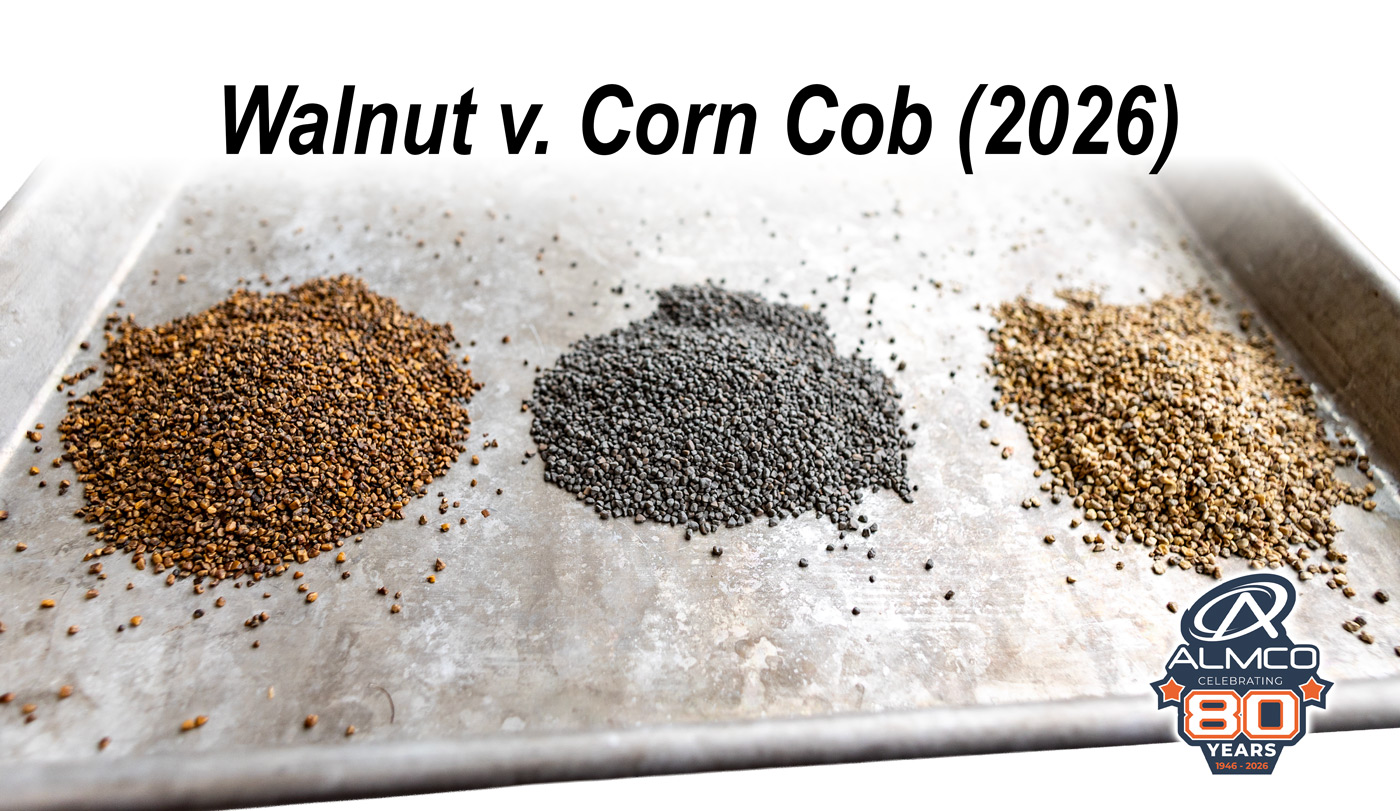
Corn Cob vs. Walnut Shell Media in a Vibratory Tub: A Full Breakdown
When it comes to finishing, cleaning, or polishing parts in a vibratory tub, choosing the right media is critical. Two of the most widely used sustainable and biodegradable options are corn cob and walnut shell.
Both materials offer unique advantages depending on your application, desired finish, material sensitivities, and cycle time expectations. Below is a comprehensive comparison to help determine which media best fits your needs.

Corn Cob Media
Corn cob media is made from the woody ring of a corn cob. It is lightweight, absorbent, and relatively soft, making it suitable for delicate finishing tasks where minimal abrasion is desired.
Walnut Shell Media
Walnut shell media is ground from crushed walnut hulls. It is harder and sharper than corn cob, offering more aggressive cutting action while remaining non‑damaging to most substrates.
Abrasiveness & Cutting Action
Corn Cob
- Softest of the two options
- Gentle, making it ideal for polishing without altering dimensions
- Removes light soils, surface dust, oils, and minor burr fuzz
- Excellent for parts that cannot risk surface scratching
Best for: Fine polishing, drying cycles, light cleaning, and delicate materials (plastics, soft metals, electronics housings)
Walnut Shell
- More aggressive cutting than corn cob
- Still considered “soft abrasive,” but can remove heavier soils
- Effective for carbon removal, paint stripping, rust staining, and tougher burr residue
- Maintains part geometry while providing a more energetic scrub
Best for: Heavier cleaning, deburring, surface prep, and parts requiring more forceful media action
Media Weight & Cycle Time
Corn Cob
- Lightweight, meaning it transfers lower energy in a vibratory tub
- Generally results in longer cycle times
- Ideal where slow, controlled finishing is preferred
Walnut Shell
- Denser than corn cob material, creating stronger impacts
- Faster cycle times due to increased mass and cutting ability
- Good match for medium-duty cleaning and surface refinement
Absorbency & Drying Efficiency
Corn Cob
- Highly absorbent
- Efficient for drying wet parts or absorbing oils/contaminants
- Leaves a clean, matte-to-polished finish depending on grit size
Walnut Shell
- Moderately absorbent
- Not typically used for drying cycles
- Better suited for scrubbing or surface restoration instead of liquid absorption
Surface Finish Quality
Corn Cob
- Produces a brighter, more polished finish
- Minimal risk of scratching
- Excellent for aluminum, brass, plastics, and plated parts
Walnut Shell
- Produces a satin or matte finish
- Can remove surface films while leaving the base metal intact
- Favored when a clean but not mirror-polished surface is desired
Material Compatibility
| Material | Corn Cob | Walnut Shell |
| Aluminum | Excellent – gentle polish | Good – deeper cleaning |
| Brass/Bronze | Excellent shine | Good for oxidation removal |
| Stainless Steel | Good final polish | Stronger cleaning action |
| Plastics | Best choice | Acceptable but may dull soft plastics |
| Painted/Coated Parts | Safe | Removes loose paint—may strip if aggressive |
| Die Castings | Good finish | Good for mold-release residue removal |
Dust Level & Media Durability
Corn Cob
- Produces more dust over time
- Breaks down faster due to softness
- Requires more frequent media replacement
Walnut Shell
- Lower dust generation
- Longer-lasting grains
- Better cost efficiency in heavy-use environments
Cost Considerations
Corn Cob is typically the lower-cost option per batch but requires a higher replacement frequency to maintain effectiveness.
Walnut shell usually comes at a slightly higher initial cost but offers greater durability, providing comparable or better long-term value.
When to Choose Which Media
Choose Corn Cob Media If You Need:
- Gentle polishing
- Oil or moisture absorption
- Delicate surface treatment
- Bright final finish
- Safe media for soft plastics or precision parts
Choose Walnut Shell Media If You Need:
- More aggressive cleaning
- Faster cycle times
- Removal of carbon, rust staining, or tough residues
- Satin/matte finishes
- Longer-lasting media
Choosing between walnut and corn cob
Both corn cob and walnut shell media have proven effectiveness in vibratory tub systems, but their capabilities can differ significantly.
Corn cob is the better choice for polishing, drying, and delicate finishing, while walnut shell excels at cleaning, light deburring, and surface prep.
Understanding the characteristics of each ensures the best performance, surface finish, and cost efficiency for your process.
Still unsure? Send us a sample, and we’ll solve it for you in our innovative testing lab. Click here to request a sample project.