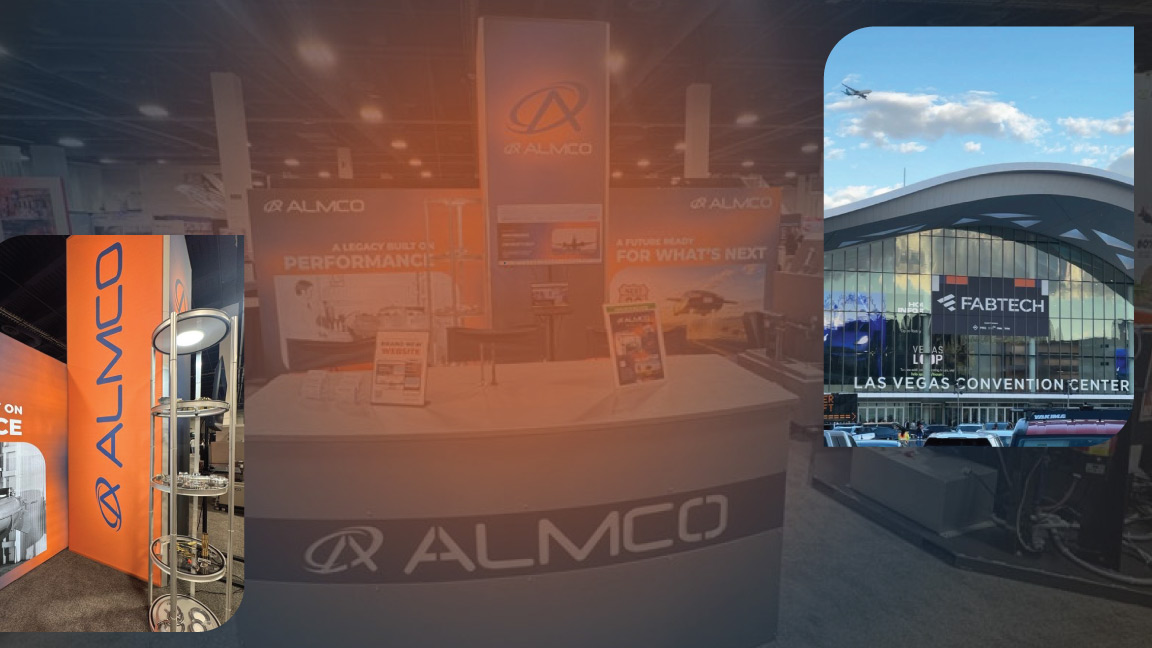

FABTECH 2026 Takeaways: Two Manufacturing Bottlenecks We Heard About Again and Again
At FABTECH 2026, one thing became clear: while manufacturers keep investing in advanced cutting, machining, stamping, and fabrication technologies, many still struggle with challenges further down the production line.
Across conversations with manufacturers of all sizes and across a wide range of industries, two operational pain points surfaced repeatedly:
- Many facilities still hand-deburr or manually edge-finish.
- Part cleaning and washing capabilities are struggling to keep pace with quality and production demands.
These challenges are more than minor process inefficiencies. They directly impact labor utilization, throughput, product quality, and a manufacturer’s ability to scale.
The Hidden Cost of Manual Deburring
Many manufacturers we spoke with reported that deburring remains a highly manual process. Operators often use hand tools, grinders, abrasive wheels, and benchtop finishing methods to remove burrs and improve edge quality.
While these methods may get the job done, they often create challenges that ripple through the operation.
Common Challenges Manufacturers Shared
- Difficulty recruiting and retaining labor for repetitive finishing work
- Inconsistent edge quality and surface finishes between operators
- Secondary operations becoming production bottlenecks
- Safety and ergonomic concerns associated with manual processes
- Continued pressure to reduce non-value-added labor costs
For many facilities, production equipment has evolved significantly over the past decade, but finishing processes have not kept pace. As a result, highly automated fabrication lines often feed into labor-intensive finishing operations that limit throughput and create variability.
In today’s labor market, these issues are increasingly difficult to overcome through hiring alone.
The Opportunity
Manufacturers are becoming more receptive to automated deburring and finishing solutions because they offer a path to:
- Reduced labor dependency
- Improved consistency and repeatability
- Increased throughput
- Better workplace safety
- Shorter manufacturing cycle times
As labor shortages persist and customer expectations continue to rise, automating secondary finishing operations is moving from a future consideration to a near-term business priority.
What We Heard
Manufacturers reported situations where:
- Parts are still wiped down manually
- Cleaning is outsourced or performed off-line
- Existing washing systems cannot keep up with production volumes
- Oils, coolants, dust, and debris create downstream quality issues
As production becomes more automated and quality requirements grow more stringent, contamination is becoming a bigger concern than ever.
Quality Challenges Driving Washing Requirements
Several recurring issues emerged:
- Surface contamination before painting or coating
- Residual machining oils impacting downstream processes
- Welding and fabrication debris affecting product quality
- Failed inspections due to cleanliness concerns
- Increasingly strict customer cleanliness specifications
For many manufacturers, cleaning is no longer viewed as a housekeeping function. It is an essential quality process that directly impacts customer satisfaction and operational performance.
The Opportunity
More manufacturers are looking for integrated washing solutions that fit directly into the production flow rather than operating as standalone processes. Facilities that integrate cleaning into their manufacturing workflow can often improve both quality and productivity.
Four Market Trends We Observed
1. Labor Challenges Continue to Influence Investment Decisions
Organizations are actively seeking ways to reduce dependence on repetitive, hard-to-staff manual processes.
2. Quality Expectations Are Increasing
Customers expect cleaner parts, more consistent finishes, and tighter process control than ever before.
3. Secondary Operations Are Limiting Throughput
Deburring, cleaning, and finishing are often the slowest and most labor-intensive steps in production. In some cases, manufacturers lamented third-party capacity constraints and needed an easy-to-implement solution.
4. Automation Conversations Are Expanding
Manufacturers are no longer evaluating equipment in isolation. They are seeking complete process solutions that improve throughput, consistency, quality, and labor utilization across the entire production environment.
Looking Ahead
One of the strongest themes from FABTECH 2026 was that manufacturers are increasingly focused on optimizing what happens after a part is cut, stamped, machined, or fabricated.
Our conversations suggest deburring and part washing are no longer secondary considerations. They are becoming critical elements of a modern manufacturing strategy.
For organizations looking to improve productivity, reduce labor dependency, and meet evolving quality requirements, these areas may represent some of the greatest opportunities for improvement. At ALMCO, we’re seeing growing interest in robust, versatile finishing solutions that help manufacturers remove process bottlenecks, automate labor-intensive operations, and create more efficient production workflows. The manufacturers that address these challenges today will be better positioned for whatever comes next.