!-- Google Tag Manager -->

Vibratory Finishing Equipment

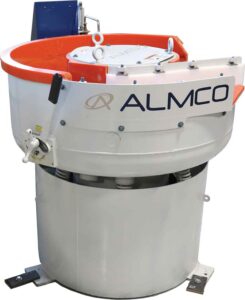
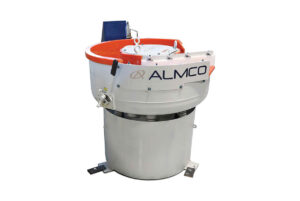
AB Series Vibratory Finishing Bowls

Proven Vibratory Finishing for Deburring, Cleaning, and Surface Refinement

The ALMCO AB Series has been a trusted solution for manufacturers seeking consistent, cost-effective vibratory finishing across a wide range of applications. Designed for deburring, edge radiusing, cleaning, burnishing, and polishing, AB Series machines combine durable construction with dependable processing performance to support both job shops and high-volume production environments.

Whether processing machined components, castings, stampings, or fabricated parts, the AB Series provides the flexibility to handle a broad range of materials, geometries, and production requirements.
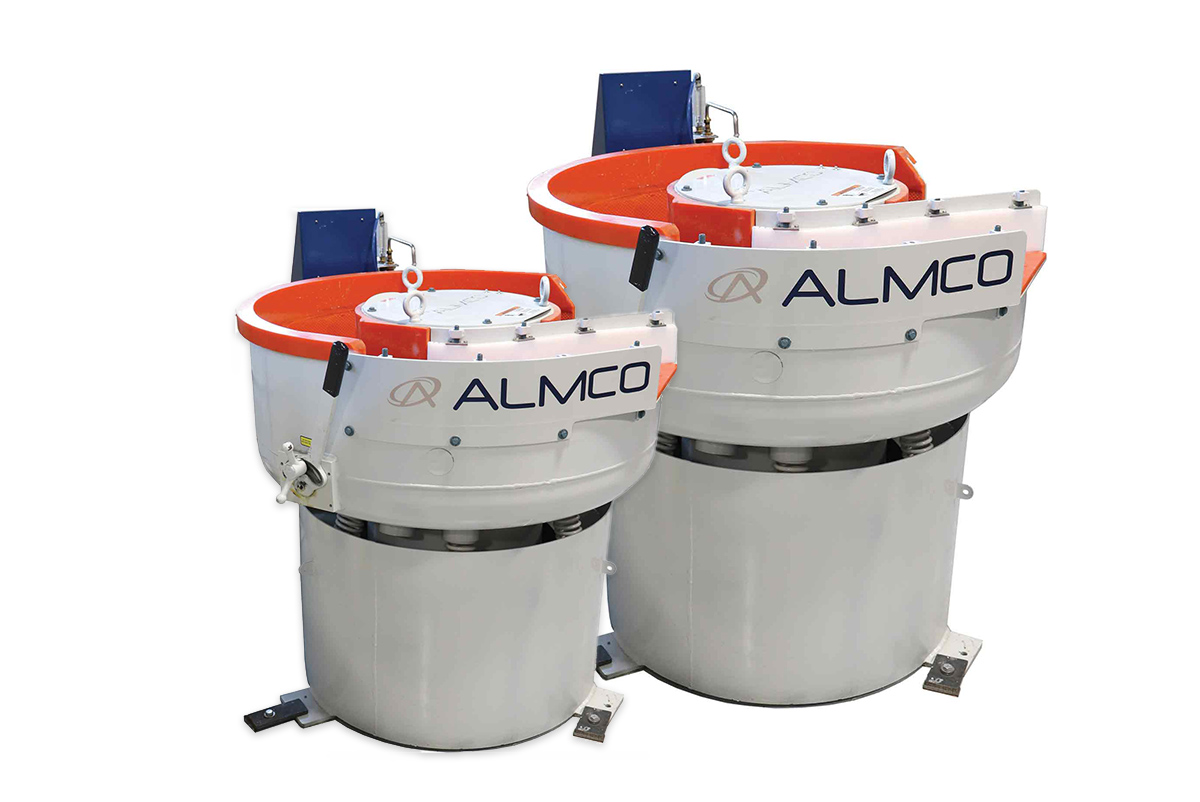
MODEL COMPARISON

COMPARE AVAILABLE MODELS

Why Choose the OR Series?

  • Proven Technology- Built on years of vibratory finishing experience and successful installations across numerous industries.
  • Flexible Processing- Compatible with a wide range of media, compounds, and finishing processes.
  • Durable Construction- Heavy-duty industrial design built for long service life and dependable operation.
  • Broad Application Range- Suitable for everything from aggressive deburring to cosmetic surface finishing.

COMMON APPLICATIONS

  • Deburring CNC machined components, Castings and forgings, Stampings and fabricated parts
  • Edge Radiusing Aerospace hardware, Medical components, and Precision-manufactured parts
  • Surface Refinement of components requiring improved appearance
  • Parts preparing for coating or assembly

Thru-Feed Model Comparison

Spec AB-4 AB-7
Working Capacity 4.3 7
Motor Size 1.2 2.9
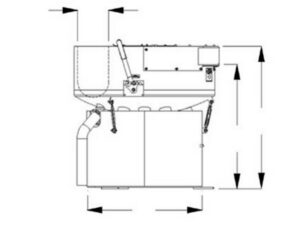
Overall Dimensions (In) 43 × 43 × 43 48.5 × 48.5 × 42.5
Channel Cross Section 9.5″ 12″
Estimated Once Around and Out 1-3 Minutes 2-4 Minutes
Power Consumption at 480v, 3 Phase 1.5 3.625
Ceramic Media Required (lbs) 408.5 665
Steel Media Required (lbs) 1290 2100
Plastic Media Required (lbs) 279.5 455
Maximum Part Size 5″ Diameter 7″ Diameter

SYSTEM DETAILS

Internal Part/Media Separation

A built-in part/media separator comes standard in the ALMCO AB line. The bowl comes with two screens with 3/4″ and 1-1/4″ openings (other sizes available upon request). The manual operated dam sits in a lowered position during processing until the machine operator manually raises it to start the part unloading process.

The dam is manually controlled by a locking mechanism that extends out the side of the machine, and as the lever is moved, the dam pivots upward forcing the vibrating parts and media to flow up over the dam and across the screen.

The media falls through the openings in the screen and back into the bowl, while the parts ride on top of the screen and discharge out the machine to the next operation.

Urethane Lined Process Bowl

The 8 cubic foot processing bowl is a heavily gusseted, circular weldment. The “working channel” within the bowl has a U-shaped cross section lined throughout with 1″ thick cast polyurethane. The channel depth decreases as the channel progresses around the bowl, giving the machine its “SBB” name (“Spiral-Bottom Bowl”). The progressively rising channel allows for easy discharge of process parts from the bowl.

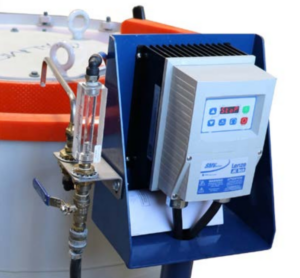
Variable Frequency Drive

Variable Frequency Drive

Variable Speed Drive

The machine comes standard with a VFD motor controller allowing you to adjust the speed of the motor to increase or decrease vibration.

The VFD is mounted on a pedestal and is attached to the machine base. The drive includes on/off controls along with the buttons to increase and decrease speed. There is also a digital readout showing the current state of operation and motor speed.

How the AB Works

How it Works

The vibrating motion of the machine’s spring-mounted processing bowl is generated by the bowl vibrator assembly. This unit consists of a vertical shaft having a counterweight mounted on each end, with the shaft turning in a pair of spherical roller bearings pressed into precision-machined housings. The vibrator assembly is bolted to the bowl such that the vertical shaft runs down through the hollow center of the bowl, extending beneath the bowl within the machine base.

In operation, the out-of-phase counterweights on the spinning vibrator shaft create an imbalance that causes the spring-mounted processing bowl to rapidly “wobble” on its springs. This vibrating action in turn causes the mass of parts and media within the bowl to vibrate, roll, and progress around the bowl in an orderly fashion. The “action” (roll and progression) of parts and media within the bowl can be controlled by adjusting the speed of the vibrator shaft, changing the amount of upper and/or lower counterweight, and also by changing the angular relation between the upper and lower counterweights.

FREQUENTLY ASKED QUESTIONS

What materials can the machine process?

Vibratory bowl tumblers are commonly used for:

  • Steel and stainless steel
  • Aluminum
  • Brass and copper
  • Zinc die-cast parts
  • Plastic components

They are typically used for deburring, polishing, burnishing, cleaning, descaling, and edge radiusing.

What machine size do I need?

Machine size depends on:

  • Part dimensions
  • Batch volume
  • Daily production requirements
  • Required cycle time

ALMCO technicians will help you calculate capacity based on part volume, media-to-part ratio, and desired throughput.

What finish can I achieve?

Typical finishing objectives include:

  • Deburring
  • Surface smoothing
  • Edge radiusing
  • Satin finishing
  • Bright polishing
  • Burnishing
  • Pre-paint or pre-plating preparation

The final finish depends on the machine, media, compound, and cycle time.

Which media should I use?

Common media options include:

  • Ceramic media – aggressive deburring and polishing
  • Plastic media – suitable for softer metals and delicate parts
  • Steel media – burnishing and bright finishing
  • Organic media (corn cob, walnut shell) – drying and final polishing

Media selection is one of the most important factors affecting performance and finish quality. ALMCO technicians will help you determine the best media for your application.

Can one machine handle multiple part types?

Yes, you can utilize different media and parts in the same bowl. Different parts and materials may require different size and shaped media depending on their outside geometry. If the same media works for multiple size components then you can run them consecutively.

Does it come with sound-dampening features?

The AB-Series does not have a standard sound cover. Custom solutions are available.

What operating costs should I expect?

Cost of ownership includes

  • Replenishing the media as it wears down in size
  • Cleaning compounds
  • Water consumption
  • Electricity to run the machine motors depending on the amperage
  • Maintenance and spare parts

Media consumption and compound usage often represent the largest recurring expenses.

Is automatic separation available?

A key feature of vibratory bowls is their ability for internal separation. The SBB-8s spiral bottom design allows media and parts to flow easily around the processing channel and up to the separation screen deck when a gate is engaged.

The SBB line can be equipped with:

  • Pneumatic gate
  • A gate clearing sequence that runs the machine in reverse
  • Automated timers and automatic speed adjustment to slow down the process as parts leave the machine.

These features reduce labor and improve production efficiency.

Should I choose a vibratory bowl or a vibratory tub?

Vibratory bowls are best for:
• Parts smaller than six inches in diameter
• High-volume batch production
• Automatic media separation
A vibratory tub is usually preferred for:
• Long parts
• Larger parts that require separation using dividers
• Heavy components
• Parts that could become damaged in a bowl’s circular action

What are the questions I need to answer before buying an ALMCO machine?

  1. What is my daily production volume?
  2. What finish do I need?
  3. What are my part dimensions and material?
  4. Which media will be required?
  5. Do I need wet or dry processing?
  6. Do I need automatic separation?
  7. What is my budget for both equipment and consumables?
  8. How much floor space is available?
  9. What level of automation do I require?
  10. What ROI or throughput improvement am I expecting?

These are the questions most industrial buyers ask when evaluating ALMCO vibratory bowl and other finishing equipment.

What cycle time should I expect?

Cycle times are dependent on:

  • The surface hardness of the material
  • Starting surface roughness of the part
  • Burr type
  • Surface finish requirements
  • Media type

Some cleaning applications or very light edge break may be accomplishing in one pass through the bowl. Heavy deburring or polishing applications can require several hours.

REQUEST A QUOTE

Let’s talk about the right equipment for your operation.

Tell us about your parts and process. Our team will follow up to discuss the equipment and your application.

Name(Required)
Email(Required)
Phone
Address
Tell us about your application, parts, quantities, or any questions.