
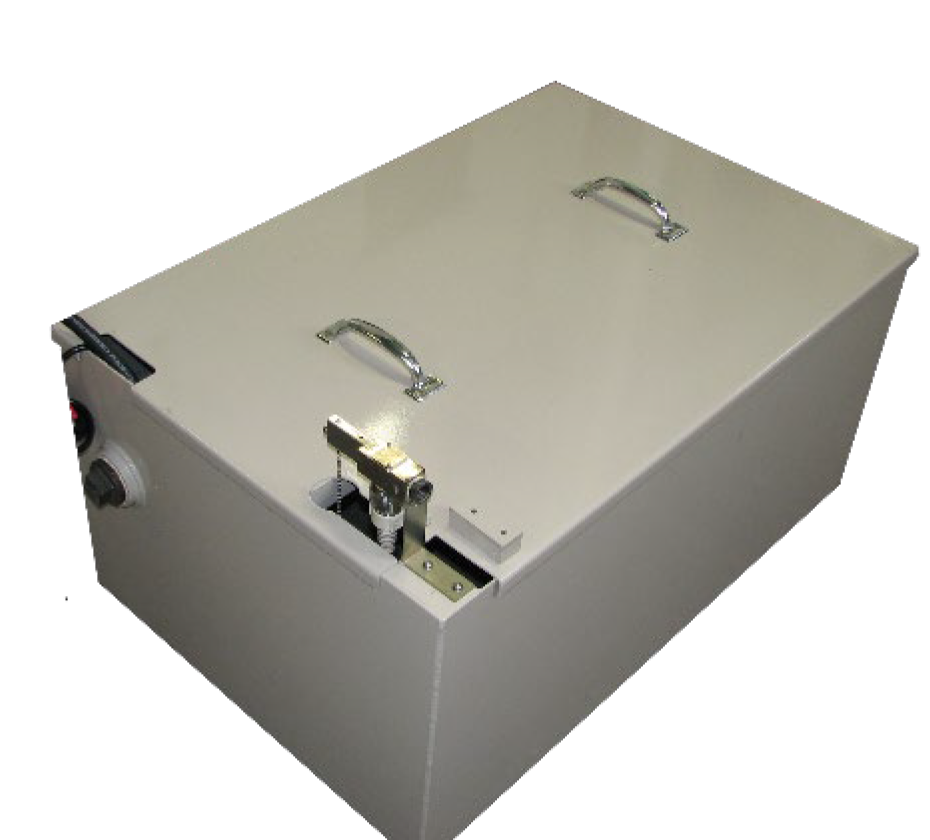
The ALMCO ST-4-50 is a compact four-stage sediment tank designed to remove suspended solids from water-based process fluids used in vibratory finishing, spindle finishing, and other metal finishing operations. Its cascading compartment design promotes gravity separation of solids before fluid discharge, filtration, or reuse.
Sediment Tanks
ST-4-50 Four-Stage Sediment Tank
OVERVIEW
ST-4-50 System Overview
The ALMCO ST-4-50 provides an effective and economical method of separating solids from water-based process fluids. Designed for use with vibratory deburring machines, spindle finishing systems, burnishing equipment, and other metal finishing processes, the ST-4-50 utilizes a four-stage cascading design to promote natural sedimentation of suspended solids.
Process fluid enters the first compartment and progresses through a series of four chambers separated by internal stainless-steel baffles. As fluid flows through each stage, heavier particles settle to the bottom of the tank, reducing the amount of suspended material carried downstream.
Constructed from all-welded 304 stainless steel, the ST-4-50 offers long service life in demanding industrial environments while maintaining a compact footprint that fits easily alongside finishing equipment.
For applications requiring additional fluid polishing, pumping, or recirculation, the ST-4-50 can be configured with optional bag filtration systems, transfer pumps, Hydrominder solution management systems, and other fluid-handling accessories.
KEY ADVANTAGES
- Four-stage cascading sedimentation design
- 50-gallon capacity
- All-welded 304 stainless steel construction
- Removes suspended solids from process fluids
- Compact footprint for easy installation
- Optional filtration and pumping packages available
COMMON APPLICATIONS
- Vibratory bowl finishing systems
- Vibratory tub finishing systems
- Spindle finishing equipment
- Deburring and burnishing operations
- Process fluid clarification
- Wastewater pre-treatment
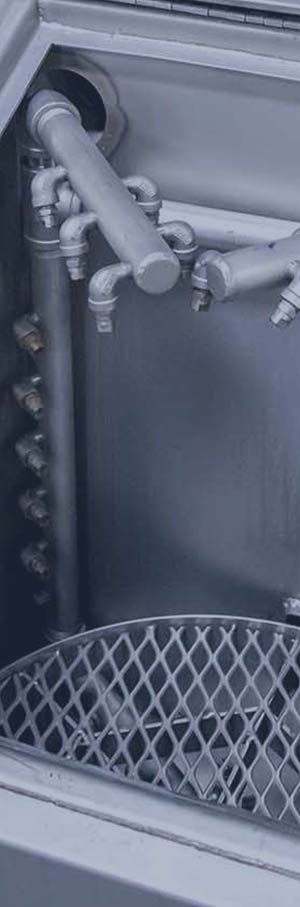
TECHNICAL SPECIFICATIONS
| Specification | Value |
|---|---|
| Tank Capacity (Gal) | 50 |
| Tank Measurements (In) | 49 L x 27 W x 13 H |
| Overall Measurements (In) | 65 L x 27 W x 51 H |
| Optional Transfer Pump | 2 HP, three-phase pump |
| Voltage | 230v or 460v, 3 Phase |
| Sedimentation Stages | 4 |
| Construction | 304 Stainless Steel |
| Internal Baffles | 3 |
| Fluid Flow | Gravity Cascade |
| Filtration Option | 8″ diameter by 30″, 50 micron bag filter |
| Hydrominder | Optional |
SYSTEM DETAILS
Baffles
Tank Construction
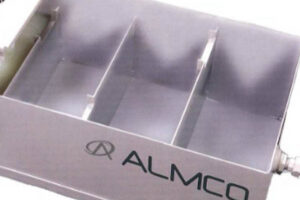
The tank is fabricated from 304 stainless steel using all-welded construction. The inside of the tank includes three parallel baffles that create four cascading tank compartments. Fluid entering the tank cascades from compartment to compartment, allowing solids to settle out of the liquid.
FREQUENTLY ASKED QUESTIONS
What does a settling tank do?
A settling tank removes suspended solids from water-based process fluids through gravity separation. As fluid flows through multiple compartments, heavier particles settle to the bottom of the tank while cleaner liquid exits the system for discharge, filtration, or reuse.
What types of equipment can be connected to an ST-Series settling tank?
ST-Series settling tanks are commonly used with:
- Vibratory bowl finishers
- Vibratory tubs
- Centrifugal barrel systems
- Spindle finishing machines
- Burnishing systems
- Parts washing equipment
- Other metal finishing processes using water-based compounds
What contaminants can an ST-Series tank remove?
The settling process is effective for removing:
- Metal fines
- Abrasive media particles
- Grinding residue
- Deburring sludge
- Scale and particulate
- Other settleable solids
The tank is designed for solids removal and is often paired with filtration or oil removal systems when additional fluid treatment is required.
What is the advantage of a four-stage settling tank?
The four-stage design increases fluid retention time and allows solids to settle progressively as fluid moves through each compartment. This helps improve clarification efficiency compared to a single-compartment tank.
Can the fluid be reused after passing through the settling tank?
Yes. Many customers use ST-Series tanks as part of a fluid recirculation system. Optional pumps, filtration systems, and fluid-management equipment can be added to support reuse of process water and compounds.
How are the tanks cleaned out?
ALMCO provides threaded fittings on the rinse and collection tanks. These are ready for drain valves or piping from tank drain fittings to your wastewater collection system. There is also access doors on the tanks to allow for cleanout.
Is filtration included with the ST-4-50 or ST-4-100?
Filtration is available as an option. ALMCO can supply bag filtration systems, pumps, and other fluid-management equipment based on your specific application requirements.
Can oil be removed from the fluid?
Yes. Optional oil skimmers and coalescers can be added to help remove tramp oils and extend the life of the process solution.
What is the difference between the ST-4-50 and ST-4-100?
The primary difference is tank capacity.
- ST-4-50: 50-gallon capacity for smaller systems and individual machines.
- ST-4-100: 100-gallon capacity for higher flow rates, larger machines, and centralized fluid-management applications.
Both models utilize the same four-stage sedimentation design and stainless-steel construction.
What are the tanks constructed from?
Both ST-Series models are fabricated from durable 304 stainless steel using all-welded construction for long-term corrosion resistance and industrial durability.
How often does a settling tank need to be cleaned?
Cleaning frequency depends on the volume of solids entering the tank and the type of process being used. High-production finishing operations may require periodic sludge removal, while lighter-duty applications may require less frequent maintenance.
Can the ST-Series be customized?
Yes. ALMCO can configure ST-Series tanks with:
- Transfer pumps
- Bag filtration systems
- Hydrominder systems
- Oil skimmers
- Oil coalescers
- Custom plumbing
- Fluid recirculation systems
- Automated controls
Why use a settling tank instead of filtration alone?
Settling tanks remove a significant portion of larger solids before the fluid reaches a filter. This can reduce filter loading, extend filter life, lower maintenance costs, and improve overall fluid-management performance.
OPTIONS & UPGRADES
Bag Filter
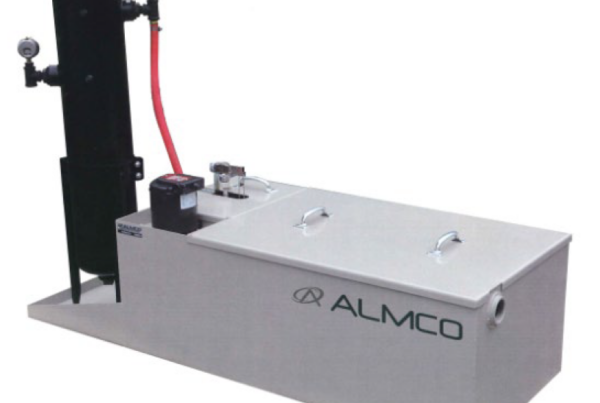
The bag filter housing is an 8” diameter by 30” tall unit that holds one filter bag rated at 50 microns.
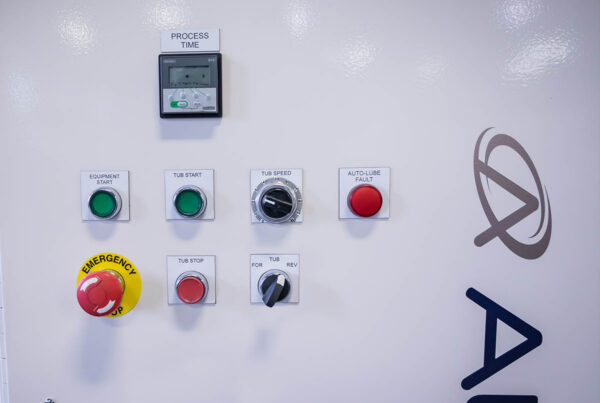
Pump Controls
Push button controls allow you to run the system when your application is running.
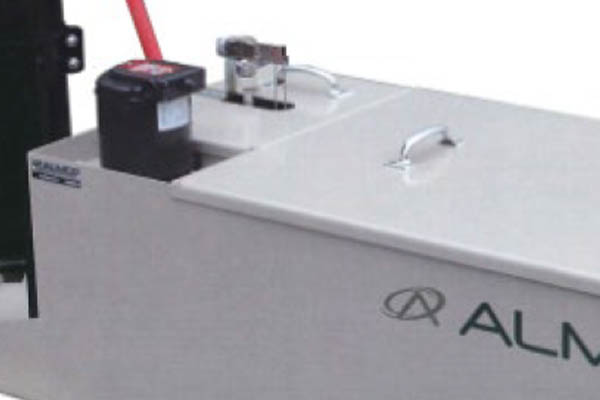
Transfer Pump
Add a 2HP transfer pump to the tank to send the settled water back to your application or through filtering.
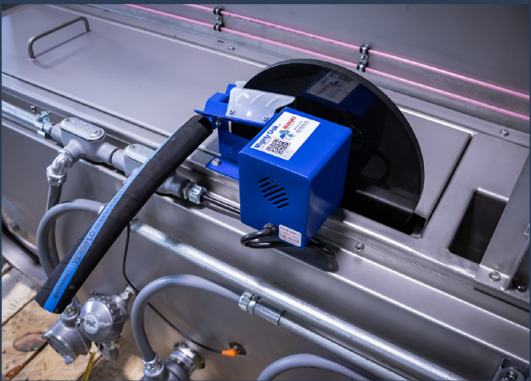
Oil Skimming
For applications involving oil-based residue in the wastewater system, ALMCO offers an oil skimming solution.
Sediment Tank Model Comparison
| Specification | ST-4-50 | ST-4-100 |
|---|---|---|
| Capacity | 50 Gallons | 100 Gallons |
| Sedimentation Stages | 4 | 4 |
| Construction | 304 Stainless Steel | 304 Stainless Steel |
| Internal Baffles | 3 | 3 |
| Fluid Flow | Gravity Cascade | Gravity Cascade |
| Filtration | Optional | Optional |
| Transfer Pump | Optional | Optional |
| Hydrominder | Optional | Optional |
| Best For | Individual machines and smaller systems | Higher-volume systems and centralized fluid management |
REQUEST A QUOTE
Let’s talk about the right equipment for your operation.
Tell us about your parts and process. Our team will follow up to discuss the equipment and your application.