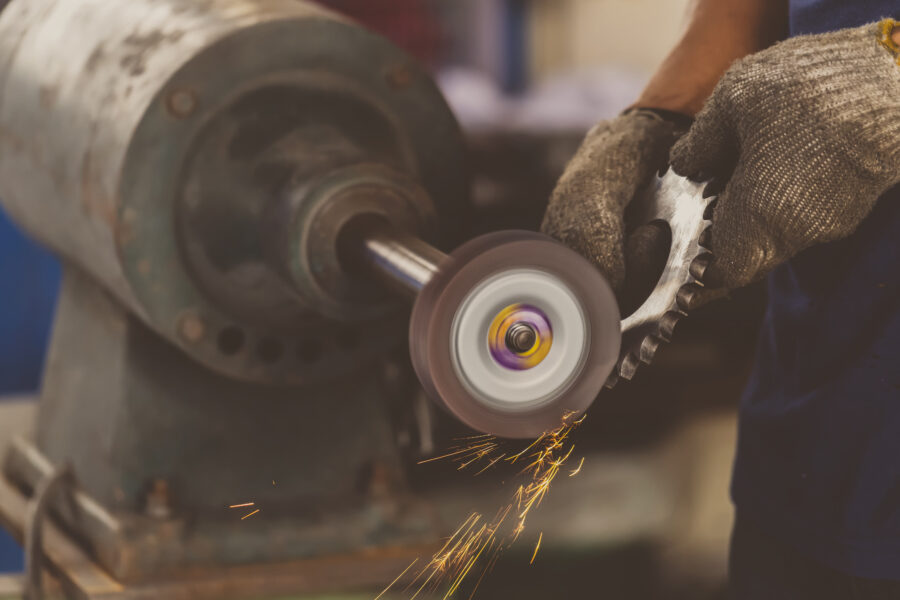

For manufacturers working with carbide components, finishing is a delicate balancing act. Parts must meet strict quality standards while avoiding damage to materials that are incredibly hard yet surprisingly brittle.
For Ultra-Met Carbide Technologies, the challenge was to increase production capacity, improve efficiency, and reduce reliance on labor without sacrificing the quality customers had come to expect.
The Challenge: Growing Production While Protecting Fragile Carbide Components
Founded in 1965, Ultra-Met Carbide Technologies manufactures custom-molded tungsten carbide products for customers across aerospace, automotive, oil and gas, mining, and woodworking industries. The company’s products are known for precision, durability, and performance in demanding applications.
Nearly two decades ago, Ultra-Met introduced a new line of carbide inserts and needed an efficient way to finish and polish parts without chipping or damaging them. While carbide is extremely hard, it is also brittle, making finishing operations particularly challenging.
After seeing the quality another manufacturer was achieving with ALMCO equipment, Ultra-Met invested in an ALMCO S2-36 Spindle Deburring Machine. The machine delivered reliable performance for 18 years and became an integral part of the company’s finishing process.
As production demands increased, however, Ultra-Met faced a new challenge. The company wanted to increase automation, reduce labor requirements, and improve throughput while maintaining the consistency and process knowledge already established within the operation.
The Solution: Automation Built Around a Proven Process
Rather than completely redesigning the finishing operation, Ultra-Met wanted a solution that would enhance the existing process while minimizing disruption.
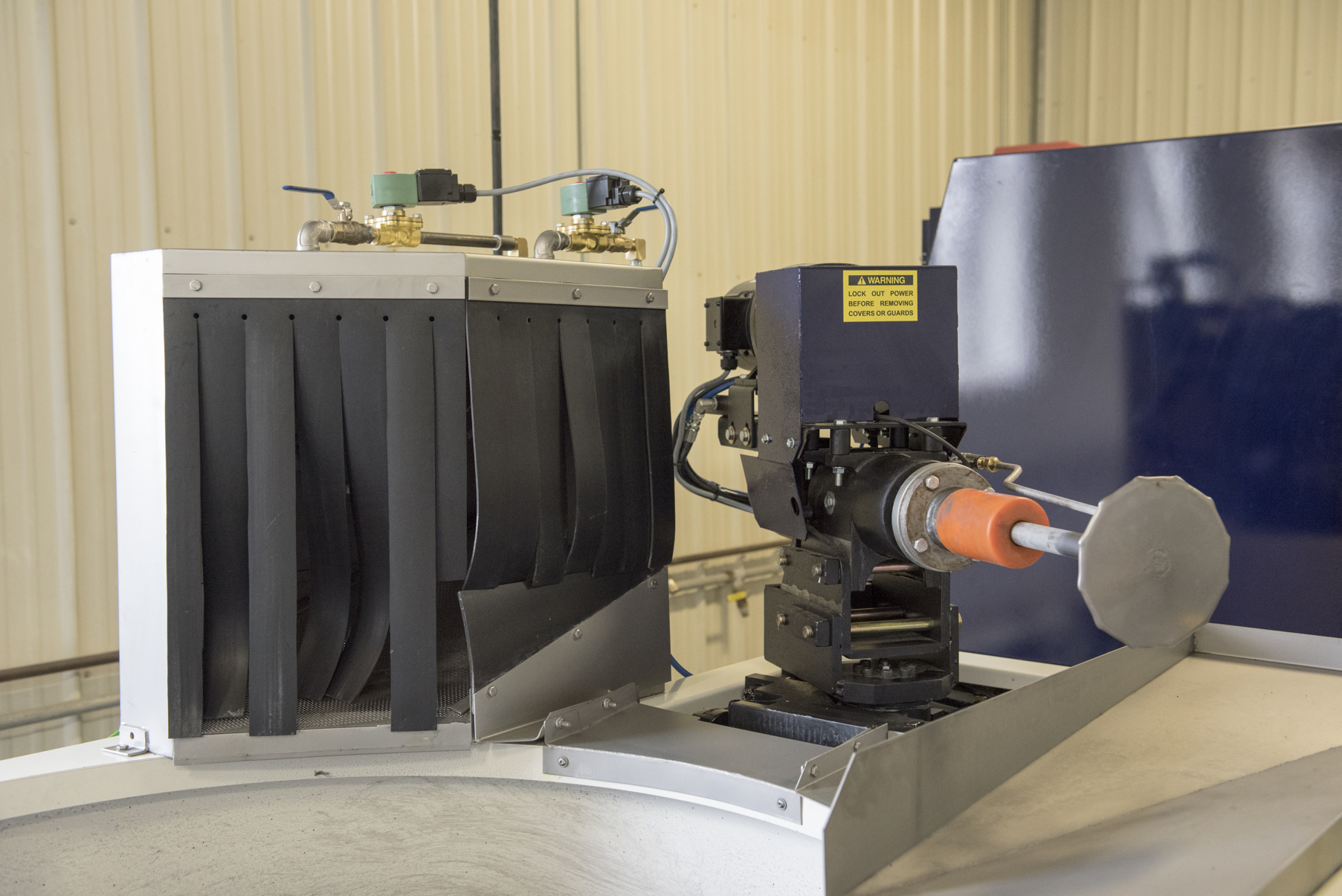
Working closely with ALMCO, the team developed an automated finishing cell centered around a next-generation dual-spindle deburring system. After evaluating multiple automation providers, Ultra-Met selected ALMCO because the solution aligned with the company’s goals without requiring a complete overhaul of its operation.
The final system incorporated:
- A dual-spindle finishing machine
- Custom robotic automation
- Dual wash systems
- A four-stage sediment tank
- Automated part handling and stacking capabilities
The result was a highly automated work cell where robots performed many of the repetitive tasks previously handled by operators, while preserving the proven finishing process Ultra-Met had relied on for years.
The Results: Higher Efficiency, Lower Labor Requirements, Faster ROI
The automated system delivered immediate operational benefits.
Because the finishing process remained familiar, employee training requirements dropped significantly. Operators could leverage existing process knowledge while benefiting from increased automation and repeatability.
The new workflow transformed production. Operators load parts into a 32-tray stacker system, which automatically runs them through the finishing cycle and unloads them for laser marking, packaging, or shipment.
The results were substantial:
- 40% improvement in shift efficiency
- Reduction in labor requirements from five or six operators to two or three
- Reassignment of employees to higher-value tasks without layoffs
- Improved ergonomic conditions for operators
- Increased capacity without expanding the workforce
- Consistent, repeatable finishing quality
- Full return on investment achieved in approximately one year versus the projected two-year payback period
For Ultra-Met, automation didn’t simply reduce labor costs. It created a more scalable manufacturing process that can support continued business growth despite ongoing workforce challenges.
A Partnership Focused on Continuous Improvement
One reason the project succeeded was the collaborative approach between Ultra-Met and ALMCO.
Rather than delivering an off-the-shelf machine, ALMCO worked alongside Ultra-Met to develop a next-generation solution tailored to the application’s specific requirements. The result was an automated finishing system designed around the company’s existing expertise while preparing the operation for future growth.
Why It Matters
Many manufacturers face the same challenge as Ultra-Met: increasing production while dealing with labor constraints and rising customer expectations.
The answer is often not replacing a proven process, but enhancing it with the right level of automation.
For Ultra-Met, ALMCO transformed a labor-intensive finishing operation into a highly efficient automated cell that improved productivity, reduced labor dependency, and delivered faster-than-expected ROI.
When manufacturers can automate repetitive tasks, maintain quality, and free skilled employees for higher-value work, finishing becomes more than a production step. It becomes a strategic advantage.