
For nearly three decades, Performance Grinding & Manufacturing has built its reputation on delivering precision tooling and machined components for demanding industries including semiconductor, aerospace, and automotive manufacturing. Success in these markets requires more than accurate machining. It demands consistent quality, fast turnaround times, and efficient operations.
As customer expectations rose, the company saw an opportunity to improve one of its most labor-intensive processes: deburring and surface finishing.
The Challenge: Increasing Efficiency While Maintaining Quality
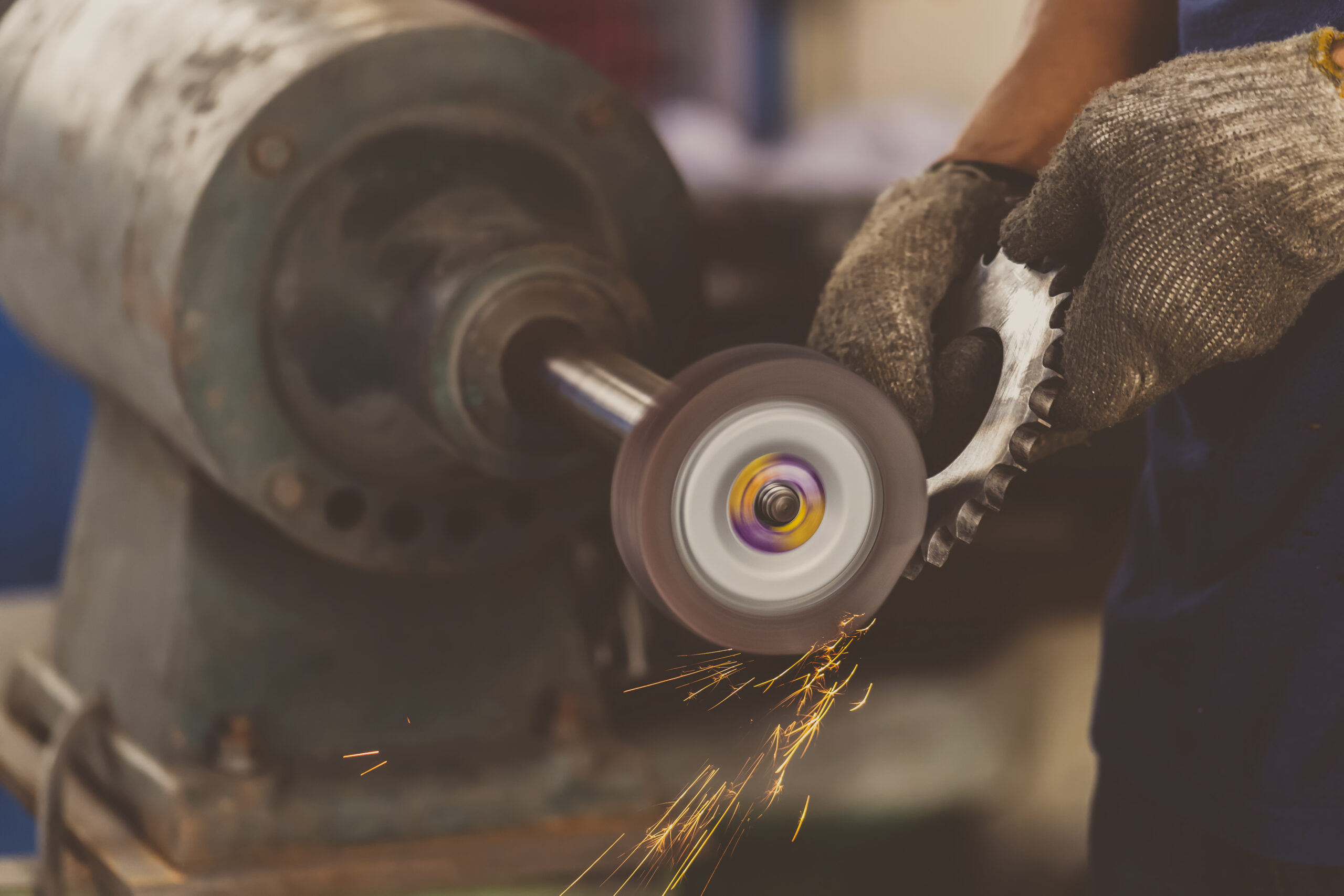
Performance Grinding’s existing finishing process removed burrs effectively, but it relied heavily on manual labor and limited overall productivity.
For a company known for responsiveness and quick delivery, spending significant time hand-finishing parts created a production bottleneck. Complex components with holes, intricate features, and tight tolerances required extra attention, increasing labor costs and extending processing times.
The team needed a solution that could:
- Reduce manual deburring labor
- Increase throughput
- Improve finish consistency
- Maintain or enhance part quality
- Support future growth without adding unnecessary labor
The challenge wasn’t simply removing burrs faster. It was finding a repeatable process that could consistently deliver better results across a wide range of parts.
The Solution: Process Validation Before Investment
Rather than selecting equipment based solely on specifications, Performance Grinding focused on proving the process first.
Working with ALMCO, the company submitted a challenging production part for evaluation. The component featured multiple holes, intricate geometry, and areas that traditionally required significant handwork to deburr consistently.
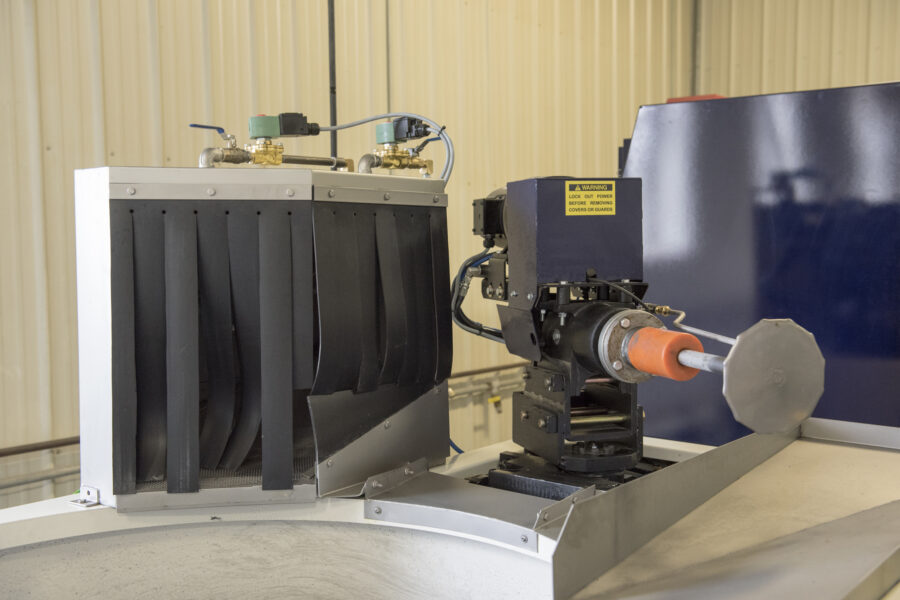
Using an ALMCO OR-3 Round Bowl Vibratory Finishing Machine, along with carefully selected media and compounds, ALMCO developed a process specifically tailored to the application’s requirements.
The finished test part demonstrated exactly what Performance Grinding hoped to achieve: cleaner edges, improved surface appearance, and a level of consistency that would be difficult to match with manual deburring alone.
Most importantly, the quality improvements were immediately recognized by both Performance Grinding and its customer.
With a proven process, the company moved forward with the OR-3 finishing system.
The Results: More Parts, Less Labor, Better Quality
The impact was immediate and measurable.
By switching from a primarily manual deburring process to vibratory finishing, Performance Grinding dramatically increased productivity. Processes that previously took about one hour per part could now be completed in batches, allowing dozens of parts to be processed simultaneously.
Beyond the productivity gains, the company achieved:
- More consistent edge conditioning
- Improved surface finish quality
- Reduced manual labor requirements
- Greater process repeatability
- Increased overall throughput
- Improved production efficiency
- Better profit margins
The enhanced finish quality also made a noticeable difference for customers, reinforcing Performance Grinding’s reputation for precision and quality.
A Long-Term Partnership for Continuous Improvement
The benefits extended beyond the equipment itself.
As new projects and applications arise, Performance Grinding continues to rely on ALMCO’s application expertise for guidance on media selection, compounds, and process optimization. This ongoing support helps ensure the company can confidently tackle new finishing challenges as its business evolves.
Why It Matters
Many manufacturers accept manual deburring as a necessary cost of doing business. But when labor demands increase and throughput becomes constrained, finishing operations can quickly become a bottleneck that limits growth.
For Performance Grinding, the objective wasn’t simply to automate a process. The goal was to create a more efficient, scalable operation that delivers higher-quality results with greater consistency.
By combining application testing, process expertise, and the right vibratory finishing technology, ALMCO helped transform a labor-intensive finishing operation into a competitive advantage.
When manufacturers can improve quality, reduce labor, and increase throughput at the same time, finishing becomes more than a secondary operation. It becomes a driver of productivity, profitability, and customer satisfaction.