
How Automated Deburring Is Transforming Scalpel Manufacturing
In surgery, precision is everything. A scalpel blade may only be a few centimeters long, but its performance can influence incision quality, surgical efficiency, and patient outcomes. One of the most overlooked threats to blade quality is the presence of burrs, or microscopic fragments of material left behind during grinding, cutting, or machining operations. Even the smallest burr can affect cutting performance, generate particles, or create inconsistencies along the blade edge. As manufacturers pursue higher quality standards and greater production efficiency, automated deburring has emerged as a critical technology in modern scalpel production.
The Burr Problem
Burrs are unintended projections of material that remain attached to a workpiece after manufacturing processes such as grinding, milling, stamping, or laser cutting. In medical devices, these imperfections are far more than cosmetic defects. Burrs can compromise sterility, create particulate contamination, and reduce the consistency of cutting performance. Medical-device manufacturers increasingly treat burr removal as a quality and compliance requirement rather than a finishing preference.
For scalpels, edge quality is especially important. Surgeons expect every blade to perform identically, delivering a clean, predictable incision. Burrs can disrupt the cutting edge geometry, increase drag during use, and potentially release microscopic particles. The challenge is magnified by the extremely fine tolerances involved in blade manufacturing.
Why Manual Deburring Falls Short
Historically, many manufacturers relied on manual deburring and polishing processes. While skilled technicians can produce excellent results, manual methods introduce variability. Factors such as operator experience, fatigue, and inconsistent pressure can lead to differences between batches and even between individual blades. Automated systems, by contrast, apply precisely controlled force, speed, and tool paths to achieve repeatable results.
Additionally, manual deburring can become a production bottleneck. As demand for surgical instruments increases, manufacturers seek solutions that can maintain quality while improving throughput and reducing labor-intensive operations. Automated deburring addresses both concerns simultaneously.
Precision Finishing for Precision Instruments
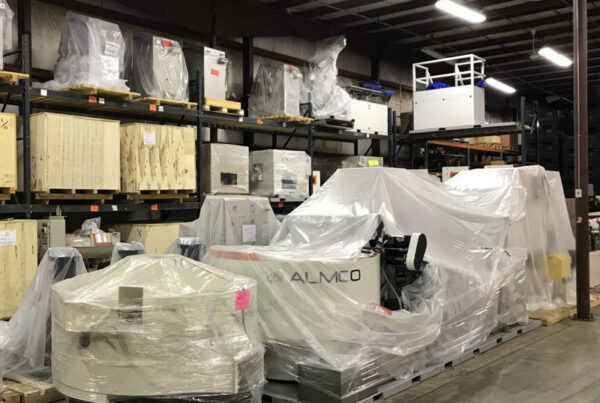
Effective deburring is not simply about removing material. It is about removing only the unwanted material while preserving the blade’s critical geometry. ALMCO’s vibratory finishing and automated deburring technologies are designed to help manufacturers achieve that balance.
Through carefully engineered finishing processes, manufacturers can:
- Remove micro-burrs and sharp edge imperfections.
- Improve surface consistency.
- Reduce manual labor requirements.
- Increase production throughput.
- Enhance process repeatability.
- Support quality and validation objectives.
For manufacturers of high-precision instruments such as scalpels, these advantages can directly improve product quality and operational efficiency.
Productivity Without Compromise
Medical device manufacturers face constant pressure to increase output while maintaining strict quality standards. Automated finishing systems allow companies to process larger production volumes without sacrificing consistency.
ALMCO systems are designed to operate within a larger manufacturing workflow, helping companies streamline production and reduce bottlenecks associated with manual finishing operations. Automated handling, controlled processing parameters, and repeatable cycle times help manufacturers achieve both productivity and quality goals simultaneously.
Rather than treating deburring as a secondary operation, manufacturers can incorporate it as a controlled, optimized step within their overall production strategy.
Looking Ahead
As medical manufacturing continues to evolve, the demand for greater precision, automation, and process control will only grow. Technologies that once served primarily industrial applications are increasingly becoming essential tools for producing high-performance medical devices.
For scalpel manufacturers, success depends on delivering a blade that performs exactly as intended every time it reaches a surgeon’s hand. Automated deburring and finishing technologies help make that possible by eliminating variability and supporting consistent quality throughout the production process.