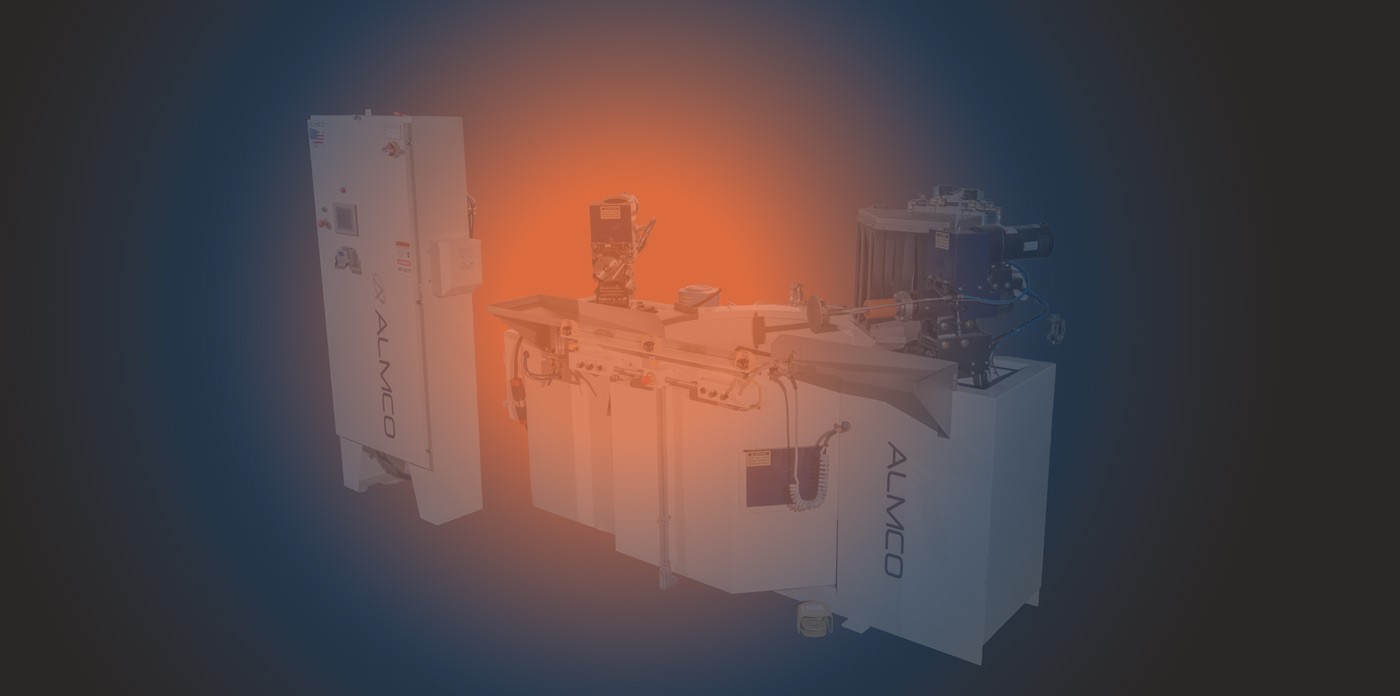

Spindle-type part deburring/finishing machines have been around for a while, but most shops are unaware they exist or don’t know how they work, where they apply, or the benefits they offer. That’s unfortunate because, compared to other finishing systems and manual deburring, spindle machines are faster and more precise, can deburr parts in cycle times often well under a minute, and can operate fully automatically when needed.
The Spindle Machine Difference
Unlike vibratory bowls, tubs, and centrifugal barrel-type finishing systems, where parts move freely, spindle machines mount parts to a spindle or spindles that rotate and dip into a bowl of deburring media/slurry that also rotates. This double-rotation action allows the slurry to permeate a part’s crevices and other hard-to-reach areas, removing burrs and producing consistent surface finishes throughout.
Picking the Perfect Parts
To determine the right parts for spindle machine deburring, our ALMCO applications experts recommend shops consider two key factors: part size and geometry. Good candidates are typically small to medium-sized precision parts such as shafts, transmission components, gears, aerospace parts, medical parts, automotive parts, firearm components, and bearing races, along with many other types of parts.
According to our experts, part size depends on the machine model, and ALMCO’s most common models can handle parts up to 8” in diameter and 3” thick. The company’s range of spindles accommodates a wide variety of part sizes and geometries.
For part geometries and shapes, those with tight tolerances and hard-to-reach areas are ideal for deburring. Parts are typically symmetrical and round, but depending on the machine model and process requirements, shops can run parts with irregularly shaped geometries.
Adding Automation
To help shops facing workforce challenges, ALMCO has developed automated spindle machine deburring systems that use robots and spindles equipped with tooling actuated by either pneumatic or hydraulic cylinders. The spindle typically holds standard collets or custom tooling designed for the part, while the robot uses custom-designed tooling tailored to the part’s specifications.
The machine and robot communicate, and once the robot places a part on the spindle tooling, the machine tooling clamps it. The robot releases the part nd moves out of the way for the spindle machine to run the deburring cycle, then notifies the robot when the part is ready for unloading. The robot moves to position and clamps the part as the machine releases it.
If the machine has a rinse and blow-off option, the spindle moves the part to the rinse/blow-off hood for rinsing and drying before returning it to the load position. Once in the load position, t e robot receives a signal to take the part from the spindle and move it to the next process.
While ALMCO technology has dominated the spindle-type deburring/finishing machine industry, other manufacturers haveenteredo the spindle machinemarketg over the past decade. However, ALMCO spindlemachiness differ from similar Johnny-come-lately machines in speed and durability. These competitors also lack ALMCO’s development history, so their machines often fall short in load capacity and reliability.